
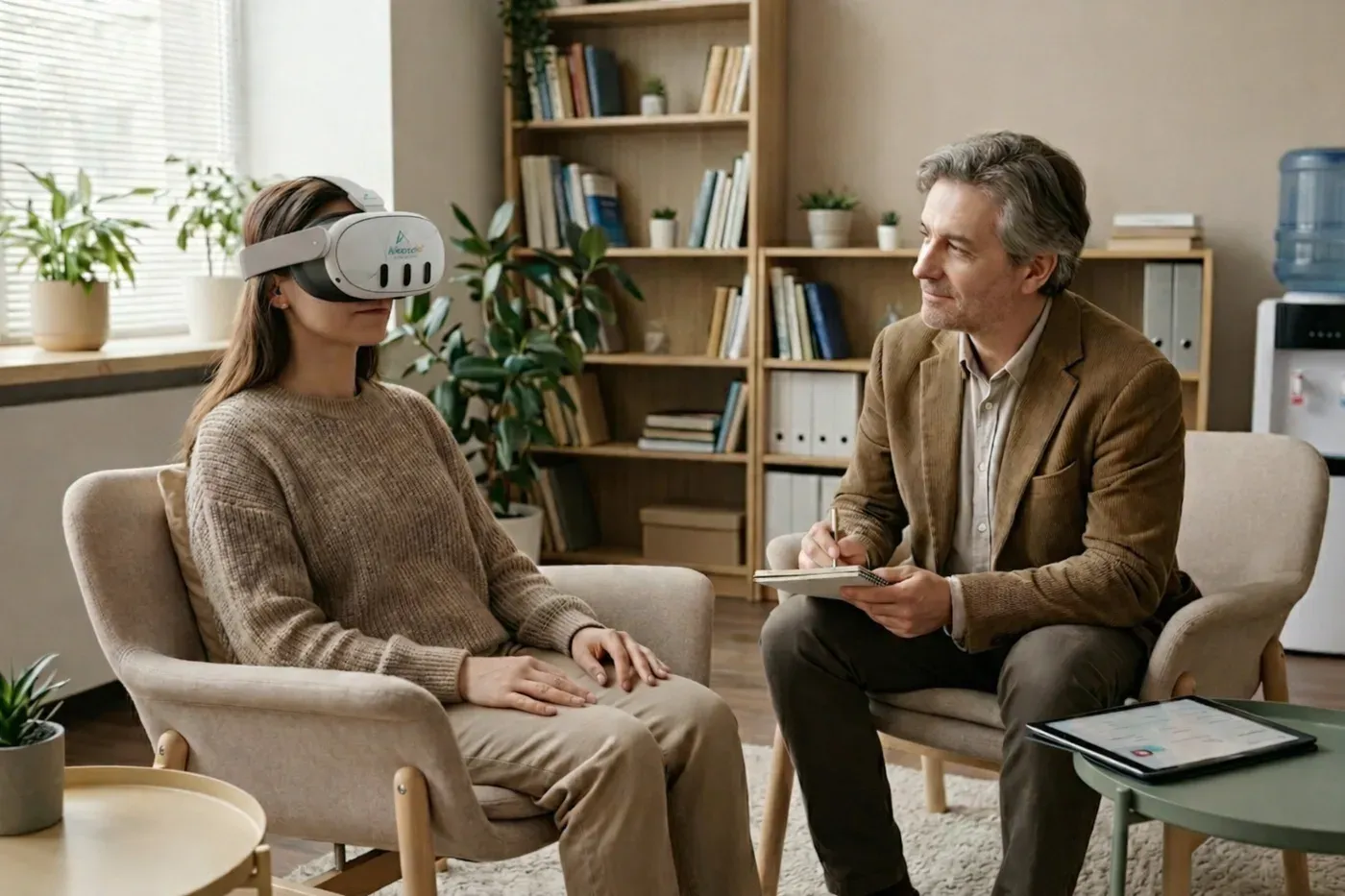
Transformative immersive experiences
Alsensia creates transformative immersive experiences that combine three pillars: guided breathing, meditation and hypnosis. Immersed in soothing natural environments, the patient is guided through exercises that act directly on the autonomic nervous system.
The therapist controls every parameter of the virtual environment: lighting, sounds, session rhythm. Intensity adjusts in real time to match the patient's needs.
This multi-sensory approach facilitates patient engagement and reduces dropout, even among patients most resistant to conventional approaches.
What the research says
A meta-analysis published in the Journal of Anxiety Disorders (Carl et al., 2019) demonstrated that VR-based interventions produce significant results for specific phobias, panic disorder and social anxiety.
These results strengthen the position of VR as a research-backed tool, particularly when integrating breathing, meditation and hypnosis techniques.
Biofeedback: an added dimension
VR alone is not always enough. That is why the most advanced systems, such as those developed by Alsensia, integrate real-time biofeedback.
Physiological sensors measure heart rate, skin conductance and heart rate variability. The virtual environment automatically adapts to this data: if stress levels rise too high, the scene adjusts to bring the patient back into their comfort zone.
This feedback loop creates a truly personalised experience.
Practical applications in care settings
In practice, immersive VR integrates at any point in the care pathway. A psychologist can use it:
At the start of a session, with a guided meditation to prepare the patient. During the session, with breathing exercises and immersive hypnosis. Or at the end of a session, as an emotional regulation exercise.
Natural environments (forests, seaside, mountains) are particularly effective at inducing a state of calm, thanks to the documented effect of nature on the autonomic nervous system (Annerstedt et al., 2013).
Towards democratising treatment
The cost and accessibility of anxiety treatments remain major barriers.
Immersive VR enables structured, reproducible and measurable sessions with reduced equipment investment. For clinics and practices, it is an opportunity to offer differentiated, evidence-based care while improving the patient experience from the very first session.