
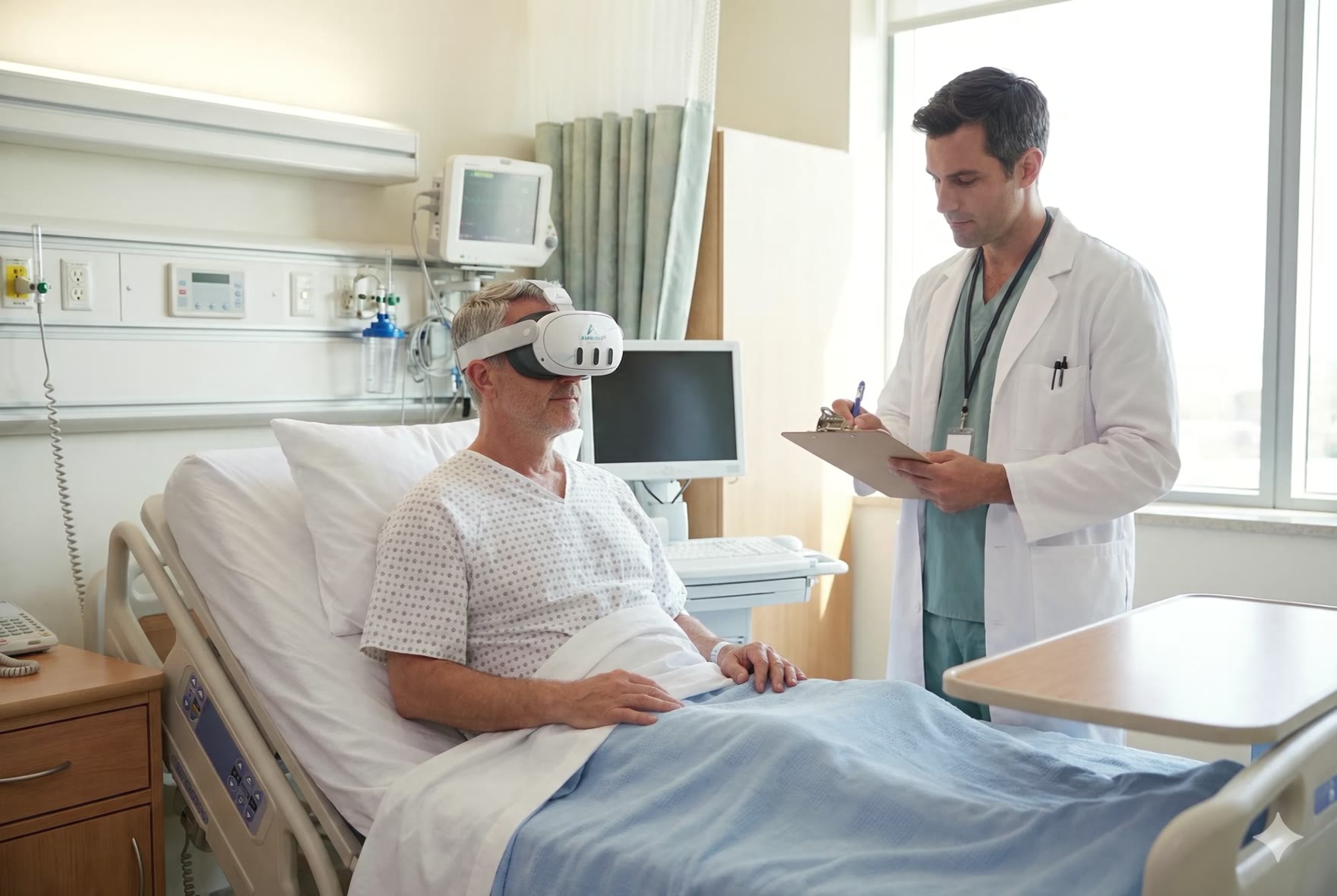
Deep Calm
Settle before a procedure
Paced breathing and guided relaxation to ease tension and apprehension while the patient waits or is being prepared.
For hospital & outpatient care teams
Alsensia’s immersive protocols support patients before, during and after clinical procedures, within your team’s care framework.
Arrange a team demonstrationExplore the care pathway
01 / The care pathway
You decide when immersion fits. The patient remains connected to the team, and clinical priorities come first.
Before
Guided breathing and sensory immersion during waiting or preparation, after the care team has explained the procedure.
During
An attentional anchor during compatible procedures or treatments, with communication and clinical monitoring maintained.
After
A guided experience after care, when the team considers it appropriate, alongside usual observation and discharge preparation.
02 / The Alsensia experience
Proprietary immersive protocols, designed with neuroscientists and psychotherapists.
The headset brings together visual environments, sound and step-by-step guidance. Selected breathing, attention and body-awareness practices are combined within Alsensia protocols.
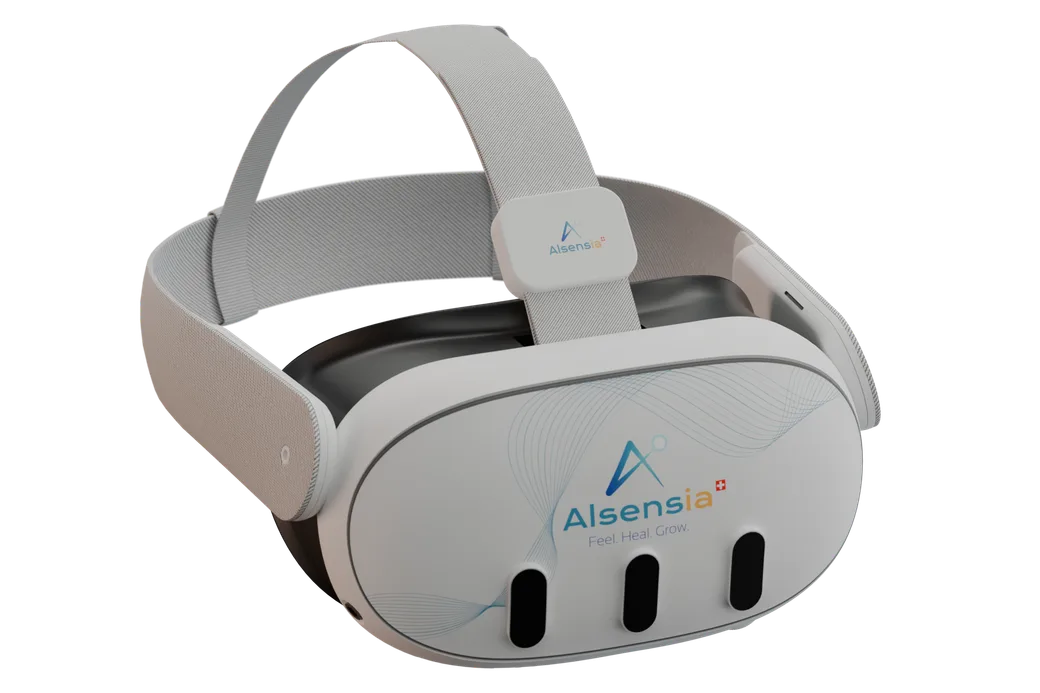
Deep Calm
Paced breathing and guided relaxation to ease tension and apprehension while the patient waits or is being prepared.
Recovery
Relaxation and body awareness to help the patient release tension and regain a sense of balance after a procedure, alongside usual observation.
03 / Clinical settings
Illustrative settings to review with your team, according to the patient, procedure and local requirements.
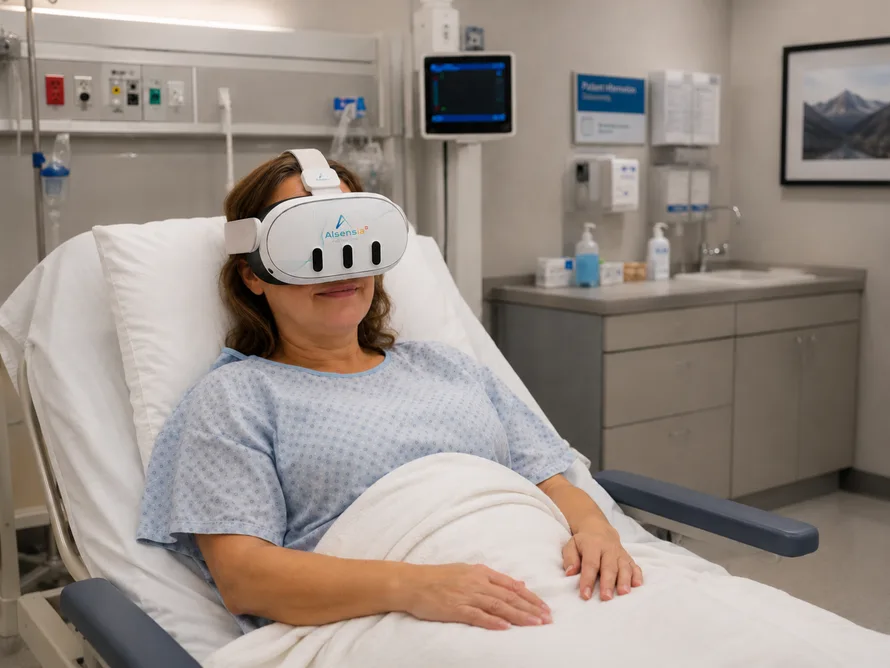
Preoperative waiting, outpatient procedures and dressing changes, when headset use is compatible with care.
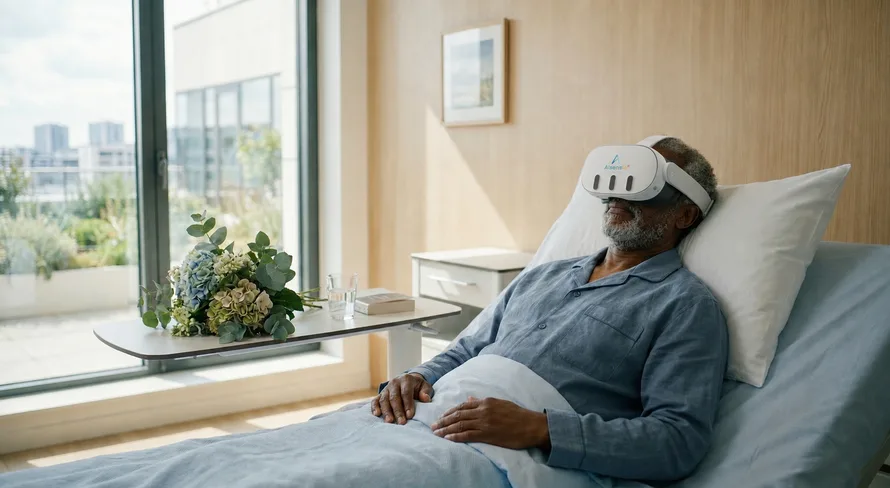
Chemotherapy and infusion visits: an immersive experience alongside treatment, according to the team’s assessment.
For your care team
Step-by-step guidance limits the need for continuous verbal instruction. Your team introduces the experience, stays available and maintains the monitoring required by the procedure.
Plan the integration Hygiene kits & UV cabinet optionYou selectPatient, protocol and appropriate moment.
Alsensia guidesA structured visual and audio experience.
You remain in chargeCommunication, monitoring and stopping the session.
04 / Patient anxiety & research
Less anxiety is a patient-centred goal. VR studies also explore medication use and recovery time, with results that depend on the clinical setting.
Preoperative anxiety
A meta-analysis of 2,357 adults found lower preoperative anxiety with VR than with usual care.
Hedges’ g −0.76 (95% CI −1.03 to −0.48): a standardised effect, not a percentage reduction. Overall certainty was very low; effects varied across settings.
Immediate postoperative analgesia
In a trial of 60 anxious adults undergoing hallux valgus surgery, fewer patients received morphine or ketamine after preoperative VR hypnosis.
VR group versus control; 30 patients per group (p < 0.03). Postoperative anxiety was also lower. A small, single-centre trial in one procedure; not evidence for all clinical settings.
Time in the recovery unit
Median recovery-unit stay with VR versus usual care in a hand-surgery trial with 34 patients completing the perioperative study.
Regional anaesthesia and monitored anaesthesia care; p = 0.018. Propofol use was lower, but reported anxiety did not differ significantly. This does not demonstrate that reducing anxiety causes shorter recovery or guaranteed time savings.
Independent studies of other VR interventions, not Alsensia trials. These findings inform our approach; the clinical efficacy of Alsensia protocols remains under evaluation.
Science & research
For your hospital or clinic
Product statusAlsensia is a complementary wellbeing tool, not a medical device. It does not diagnose, treat or prevent disease. Clinical efficacy is under evaluation.